|
SEO updates you need to know
Sponsor: Semrush

The market's most complete brand visibility data
Semrush for Enterprise is built for brands who refuse to be second.
The industry's largest keyword, backlink, and clickstream datasets form a single connected system. Think 27B keywords, 43T backlinks, 213M prompts, and 500TB of web activity data at your fingertips.
Act on shifts first and prove impact with insights from intent to purchase. This is what visibility leadership looks like.
|
Search with Candour podcast
The biggest SEO news stories of March 2026
Season 4: Episode 65
Jack Chambers-Ward hosts a solo episode of Search With Candour, recapping the last 6 weeks of SEO news from the Core Updates newsletter.
Jack covers Google’s February 2026 Discover update, a fast March spam update, and the ongoing March 2026 core update.
He then highlights Bing Webmaster Tools, adding AI Performance reporting, Google’s WebMCP new UCP features.
|
|
|
This week's solicited tips:
I apologise for calling your meta description a bloated warthog.
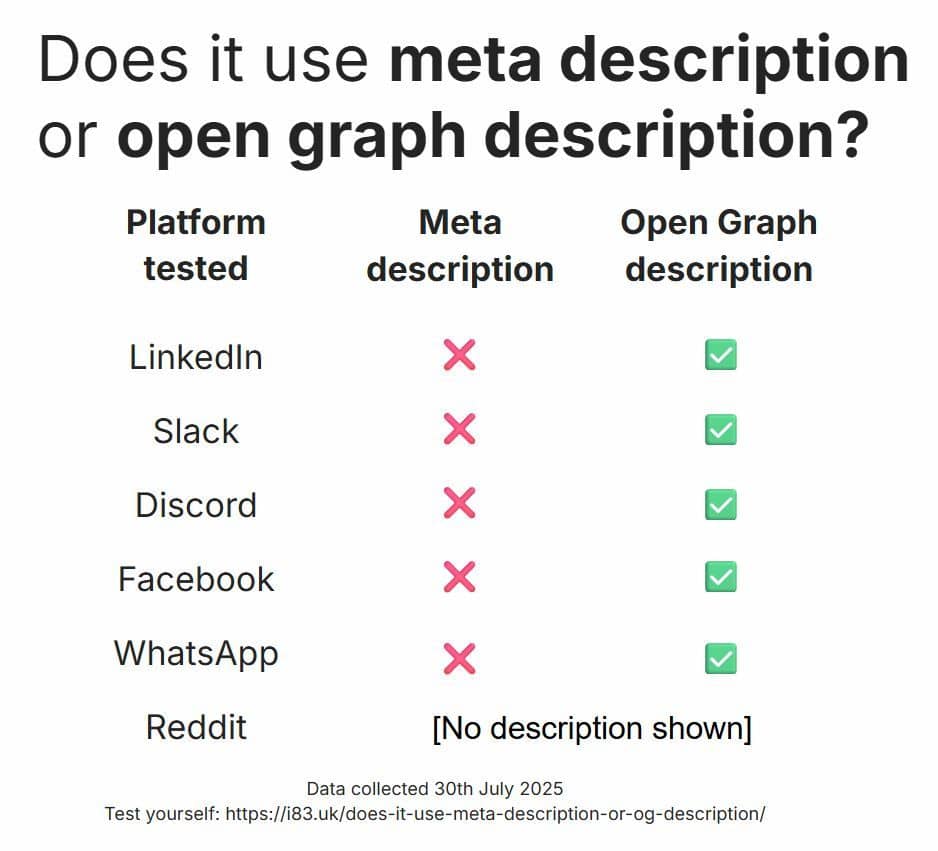
You DO NOT need a meta description for your snippet to be shown correctly on social media sites or even messaging apps like Slack and WhatsApp.
I previously posted data from three independent tests that indicated it was optimal to leave your meta description blank. Leaving the meta description blank encouraged search engines to generate one based on the user's query, which resulted in higher CTR than crafting a single one yourself.
One of the most common comments on why you should not do this is "you need a meta description to show your snippet on [insert site]"
💀💀💀 This is just not true and is easily testable 💀💀💀
You can specify an og:description (Open Graph) separately to a meta description, and this is the description that every social media and messaging platform I have tested uses over the meta description.
I've included the URL so you can easily test this for yourself on your favourite platform.
Test, test, test 🫡
|
Conceal your SEO tractics and harness your metrics, until the time of the reporting.
SEO is not a performance channel, it is swamped with unknowns, especially when it comes to analytics and tracking. Some of the best (and hardest) advice is owning the "I don't know", and not restricting your strategies within the limits of what you can 'definitely' predict or model.
This resonates particularly strongly with me, as the definition of 'Candour' is "the quality of being open and honest; frankness." and it is something we have applied to everything we do in SEO from the beginning. We sometimes lose a bit of business because of it, but I think it is for the best.
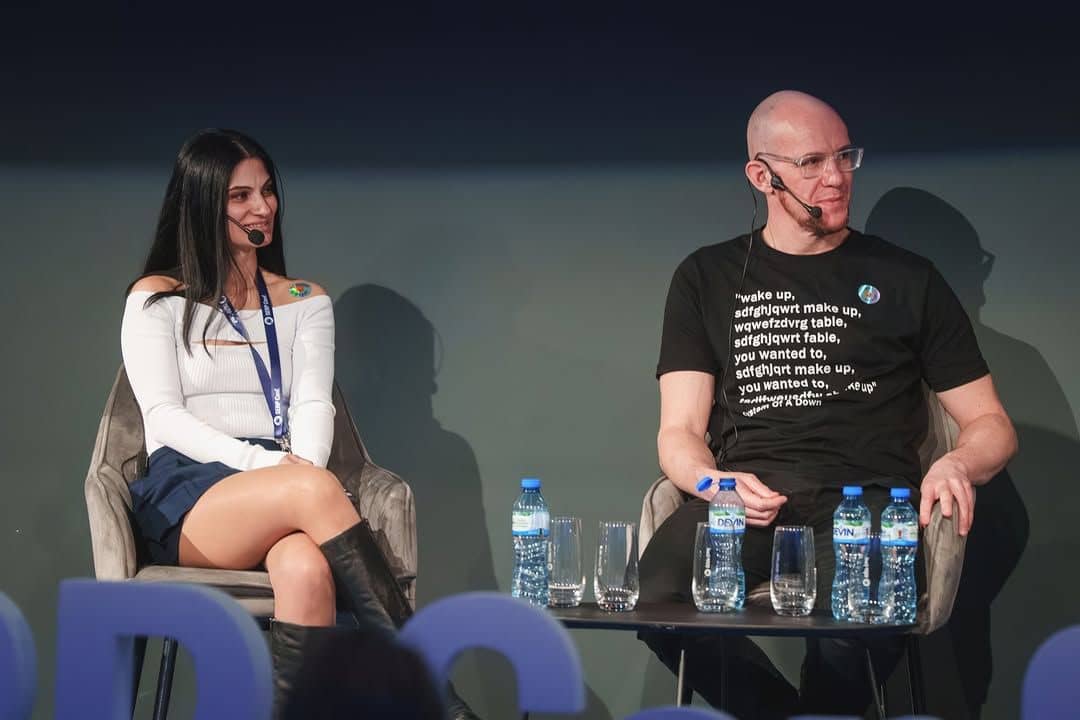
This is why "Reporting Uncertainty Without Losing Credibility" by Bengü Sarıca Dinçer (whom I had the pleasure of being on a panel with at SERP Conf. Sofia last week) should be your read of the week, for the nuts and bolts of how to take this approach.
|
Patience, SEO. You have done well, but it'll take time.
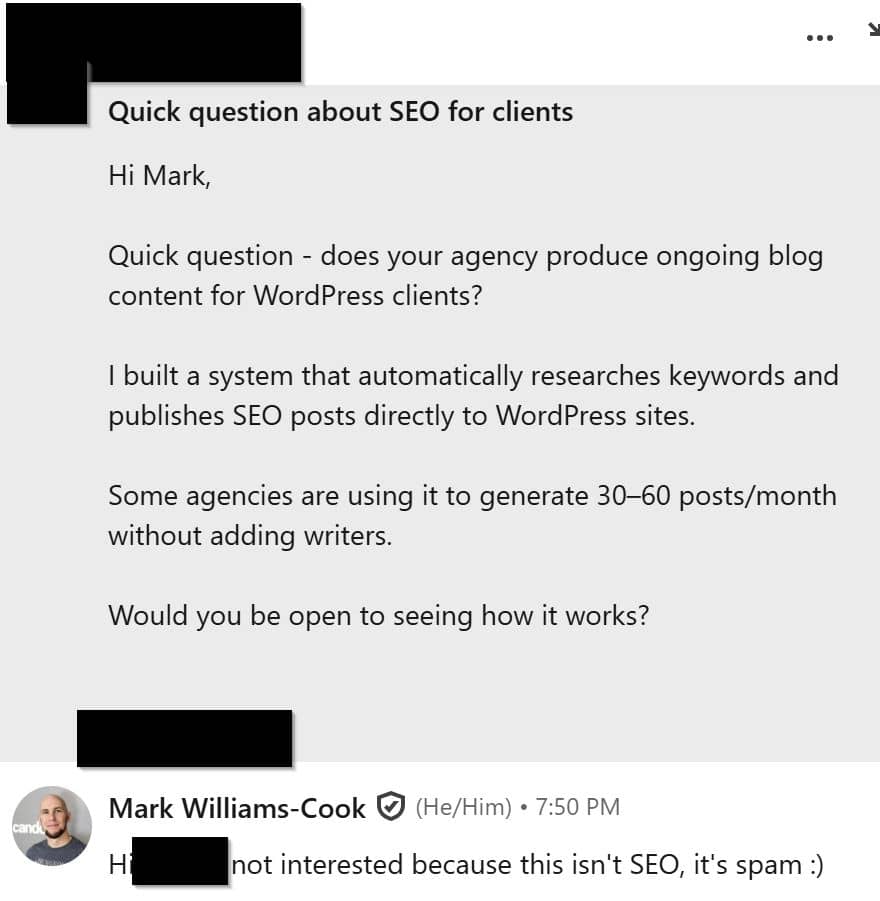
Choose a lane and stick to it. Words at scale is not an SEO strategy, I would go as far to say this is not 'SEO', is it simply spam and you will get slapped by Google at some point.
If you're going to spam, there are much better and more profitable ways than this.
|
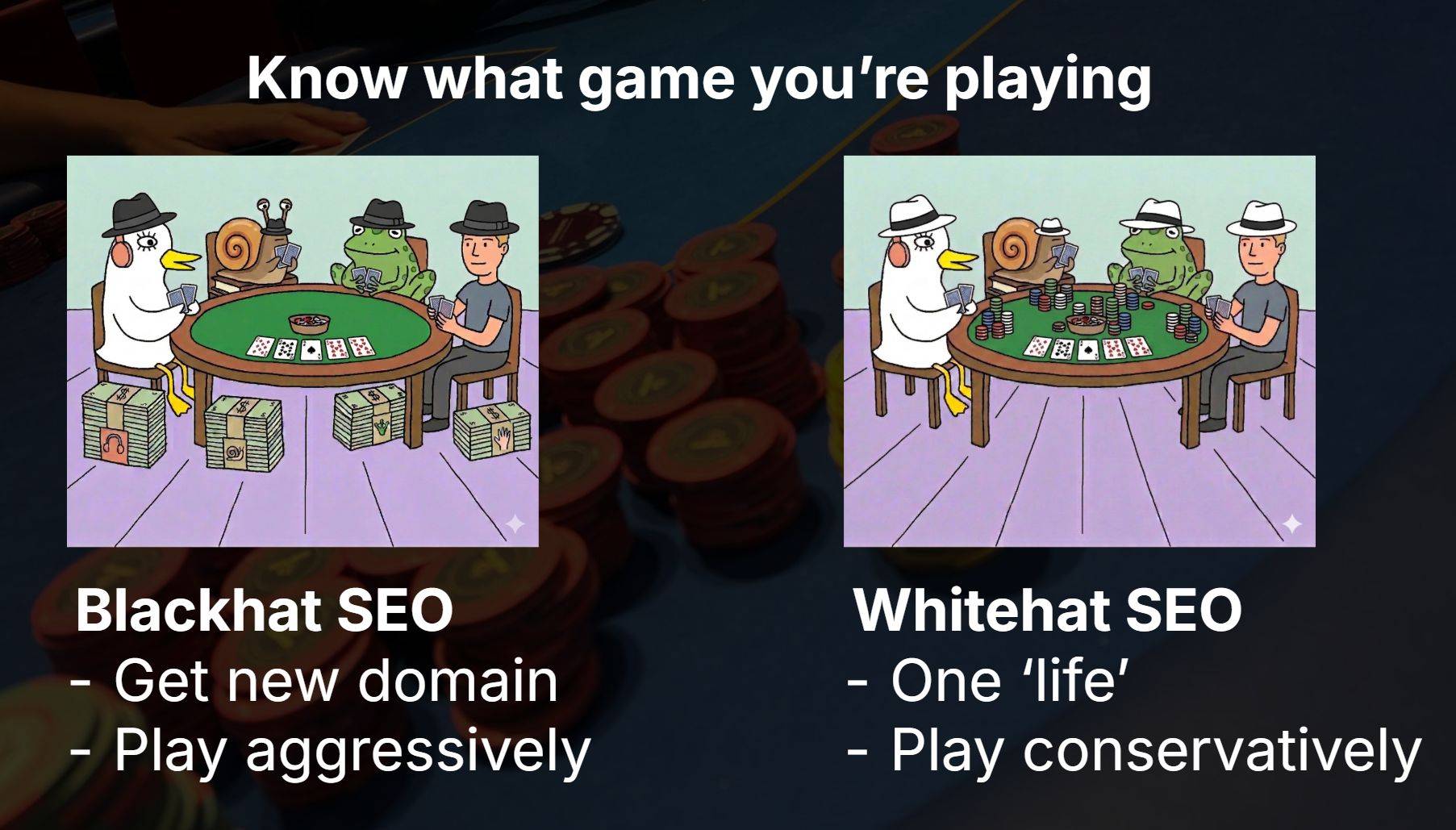
What is blackhat? Expired domains, stuffed with links and content.
I sometimes see people arguing whether ‘blackhat’ or ‘whitehat’ SEO is more effective, but I think the entire premise is flawed and they aren’t comparable. 🎲
A great analogy to explain this is poker (stick with me, even if you don’t play) ⤵️
While it’s the ‘same game’, there are two main formats of play for Texas Hold’em Poker:
💵 Cash games: These are games where if you ‘bust out’ and lose all your chips, you can simply put more money on the table and keep playing. This means that the optimal play is to be aggressive: if you believe you are ‘ahead’ (have a >50% chance of winning), you need to be gambling. You have unlimited ‘lives’, so the most profitable thing to do is push hard when you are ahead.
🏆 Tournament games: These are games where if you ‘bust out’ and lose all your chips, then game is over for you. You get your chips at the start, and only the last few remaining players win, everyone else gets nothing when they are eliminated. This means the optimal strategy is to play conservatively, let chips accumulate, bet small when you are not clearly far ahead, and even when you are far ahead, don’t take risks.
This is really similar to blackhat and whitehat SEO. It’s possible for blackhats to make a lot of money by playing aggressively, and when they get banned, simply buying a new domain and starting over. This is profitable.
However, if you’re an agency working with a brand established 20 years, with TV campaigns and other media, buying a new domain every 2 months isn’t a very popular strategy. You’re in the for the long haul, so the most effective thing to do is play conservatively and build your strength over time.
Blackhats and whitehats are playing different versions of the same game, they are not directly comparable. The only bad move is playing the wrong strategy in the wrong game. 🎴
|
The gathering; when the few websites who remain will battle to the last.
If you're a company looking to be successful in search, then a productive way to view a relationship with an SEO agency is like that of a Personal Trainer, let me explain 🏋
You wouldn't go to a Personal Trainer with the attitude, "it is your job to get me in shape, and if I don't get into shape, you have failed"; because to be successful, you understand there is a responsibility for you to put in the work and be consistent; the trainer can't do that for you.
Optimisation is the sum of many small efforts accumulating and tipping the balance in your favour, this means changing habits.
The Personal Training example might be something simple like improving your diet outside of the gym, instead of binge eating and turning up hoping your twice a week session is going to fix the bad habit.
This is no different to a company churning out content without much thought and then asking an SEO to "optimise it" so it ranks.
In this example, the behaviour change would be to integrate some of the user-centric SEO processes of user research, getting data on intent, making sure you're adding value, and only then adding further tweaks to optimise.
Yes, there are some activities an SEO can "do for you", but the most effective partnerships are those that are working together to achieve the same goals. I see too many organisations with a hands-off "sprinkle the SEO on now, please" attitude. They invariably fail.
|
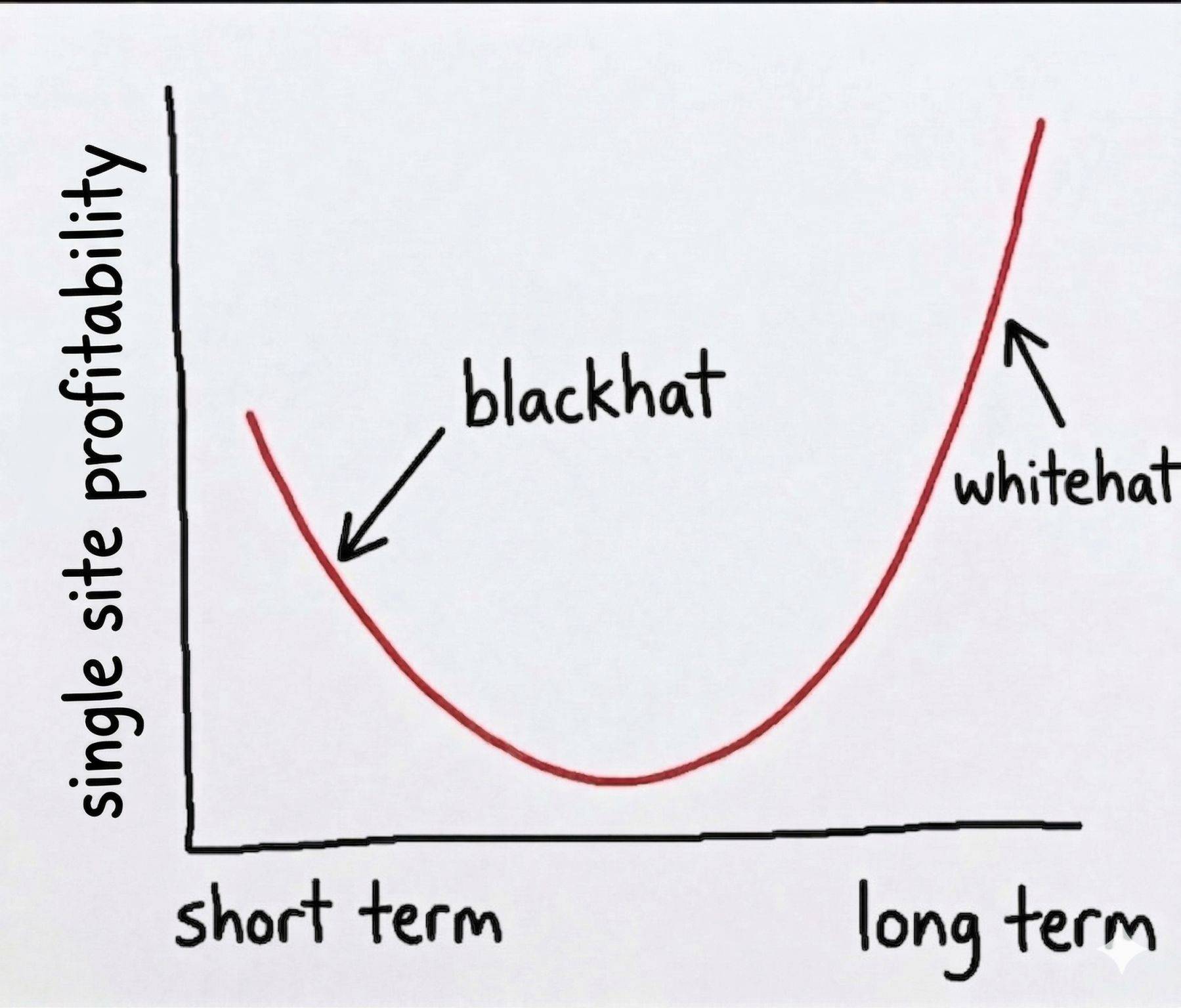
Never overextend your greyhat SEO. You are vulnerable and off balance.
In my experience, blackhat SEO can be very profitable very quickly, and whitehat SEO can be even more profitable (on a single site) over the long term. You want to know what isn't?
It's the stuff in the middle, maybe you could call it "greyhat". It's the "sort of cheating", things like badly done programmatic SEO with AI content. It 'works', but it's not as profitable as 'proper go hard' blackhat, but it's also not as profitable as whitehat because those sites inevitably fall foul of an algorithm update.
So, if you're going to cheat; cheat hard, kick the door down and take everything. If you're not going to cheat, then don't; not even a bit, rely on good strategy and cumulative, compound effect of good optimisation.
|
Refer subscribers and earn rewards!
|
|
|