|
SEO updates you need to know
Sponsor: Croatia SEO Summit
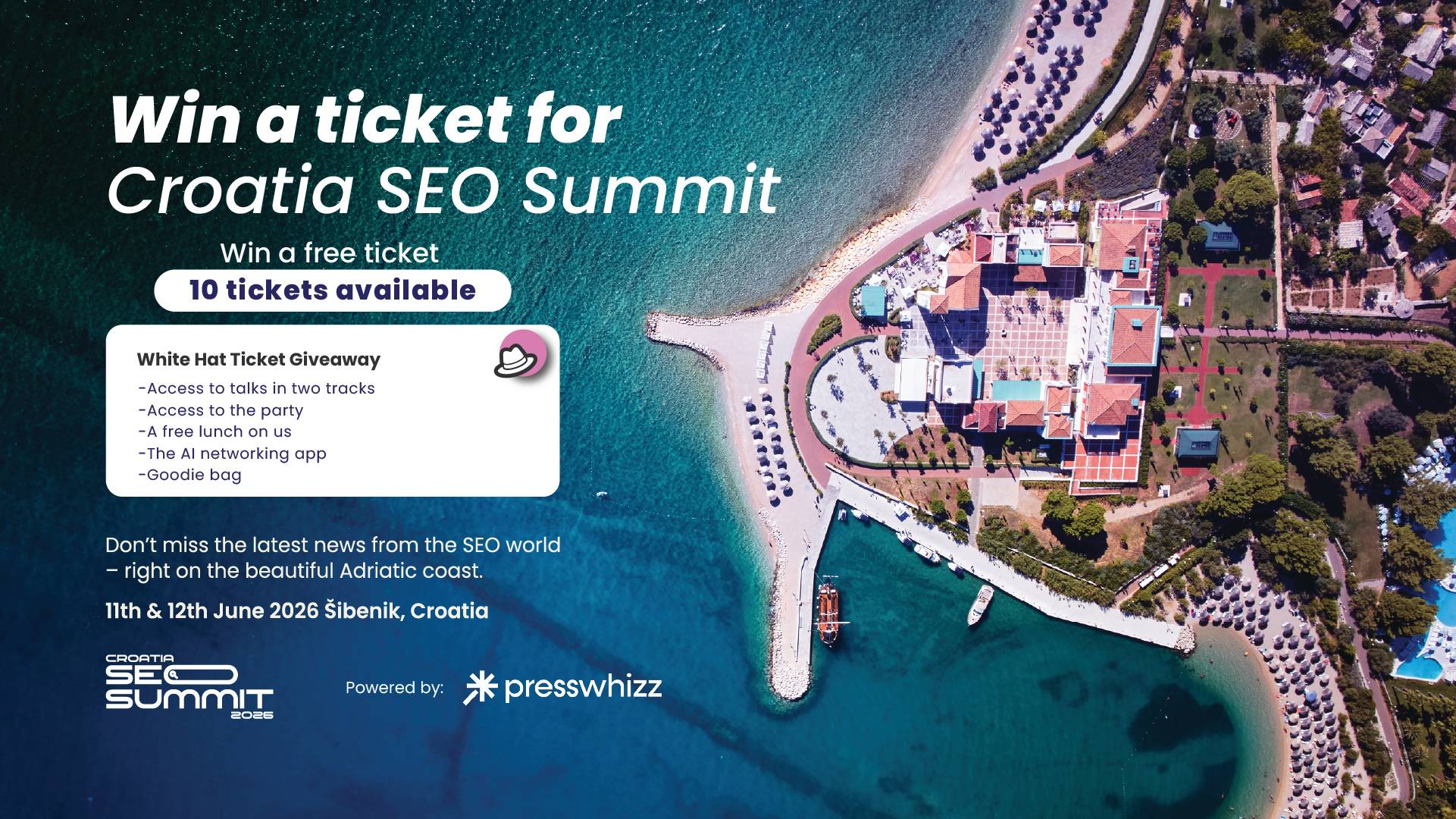
Win a free ticket to Croatia SEO Summit!
Croatia SEO Summit is giving away 10 White Hat tickets for the conference in Šibenik on June 11-12, 2026. The raffle is simple: fill out the form, accept the terms, and wait for the draw.
The White Hat ticket includes access to talks in two tracks on 12 June, entry to the party, free lunch, the AI networking app, and a goodie bag. It is essentially a full second‑day conference experience at no cost.
This year’s lineup brings international SEO experts such as Lily Ray, Craig Campbell, Barry Adams, Gus Pelogia, Ryan Robinson, and more, covering SEO, AI, and revenue‑driven content strategy. Come and enjoy some great talks and cocktails at the beach!
|
Search with Candour podcast
Does answering People Also Ask questions improve rankings?
Season 4: Episode 68
Jack Chambers-Ward and Mark Williams-Cook are back in the Candour studio to discuss if People Also Ask questions improve rankings and Google’s recent crackdown on self-promotional listicles.
They discuss a study using AlsoAsked API, SERP scraping, and OpenAI to score whether top-20 ranking pages fully/partially answer related People Also Ask questions.
They then cover major traffic losses seen around late January for sites relying on self-promotional “best X” listicles and programmatic comparison pages, noting some core product pages survived while other pages were suppressed.
|
|
|
This week's solicited tips:
When you understand UCP, you know what it's capable of
You can add UCP-compatible data attributes like product Q&A, accessories, sizing guides, shipping details, and return policies to your Google Merchant Center product feeds.
This lets AI agents in Search, Gemini, and Business chats access rich product info for seamless shopping.
If you missed the memo Universal Commerce Protocol (UCP for the cool kids) is Google's new open standard announced in January for agentic commerce.
It creates a common language so AI agents interact across platforms, shoppers, and payments, powering features like direct checkout on AI Mode in Search and Gemini app.
|
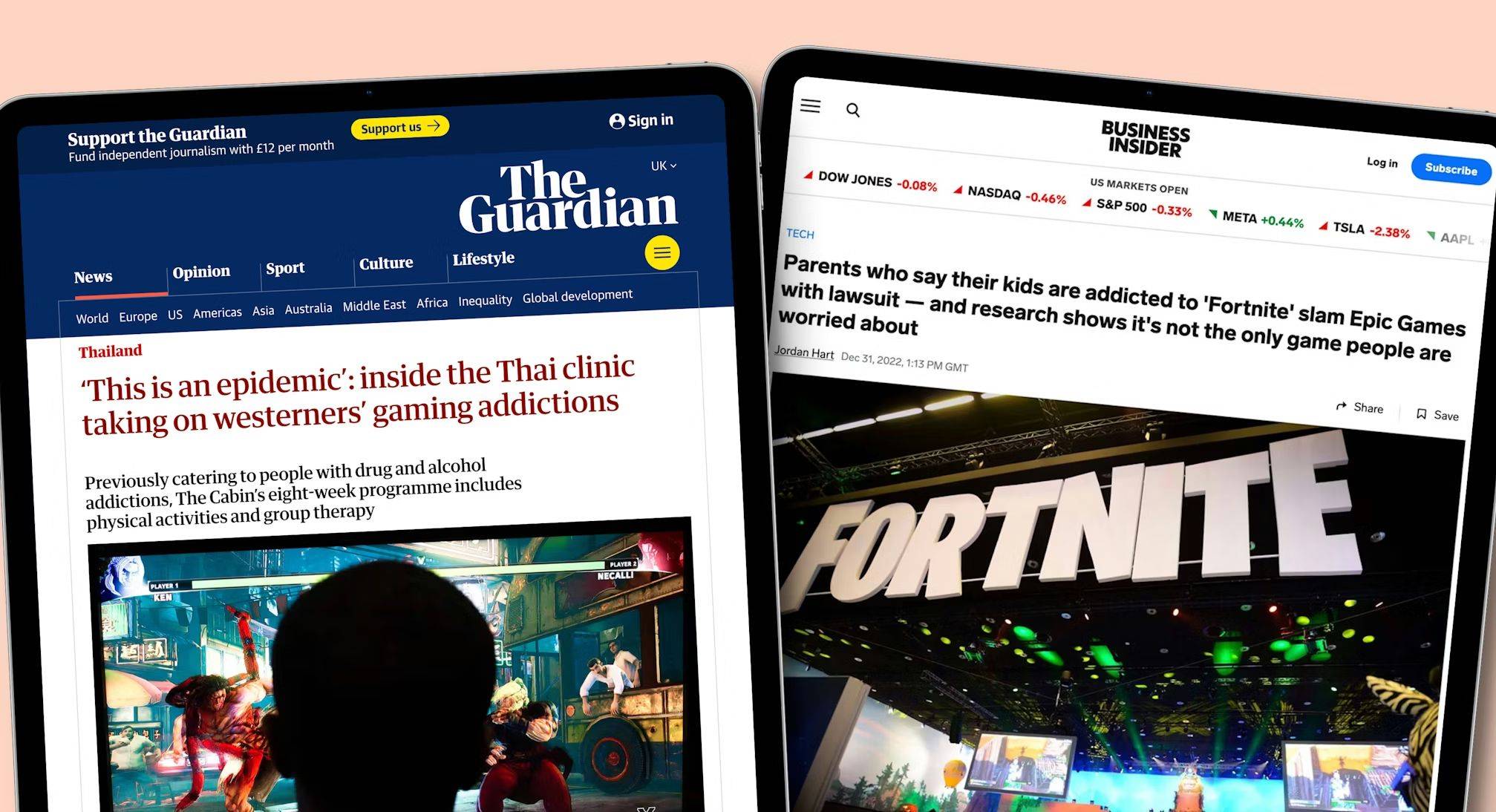
Some SEOs are always trying to ice-skate uphill
~85% of AI citations come from third-party pages, not brand-owned content*.
The last slide of my 2025 presentation of "from RAG to Riches" was highlighting that SEO for AI is a multi, not single site focus.
AI-generated answers lean towards the mean, you need to be in more places to win visibility. Most brands I see need to be investing a higher % of their SEO budget in specialist digital PR.
It is this coverage that is creating citations (and of course, Google traditional search rankings). 📈
|
You didn't have Google working on it then, now did you?
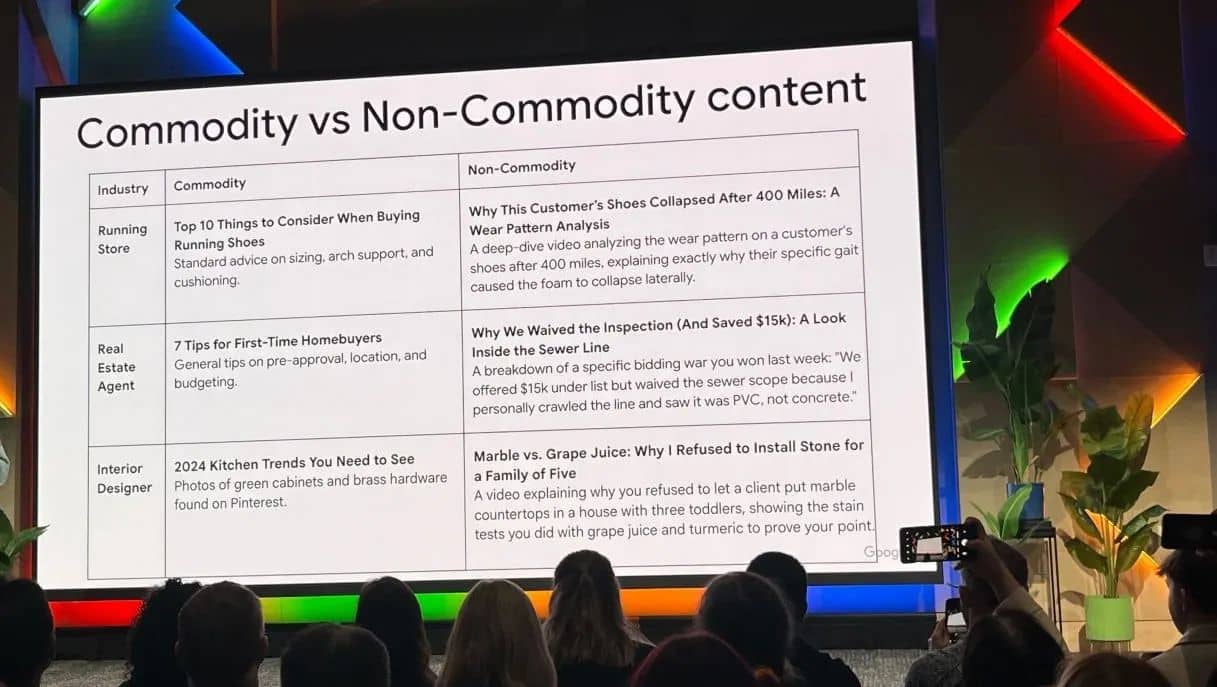
If it wasn't painfully obvious with recent algorithm updates, like the big one in January, Google prefer "non-commodity" content and Danny Sullivan was helpful enough to give some examples.
The writing has been on the wall for years, and Google is only accelerating its plans to prioritise content that demonstrates real-world experience and unique expertise (aligning with their E-E-A-T guidelines) over generic advice that can be easily replicated by competitors or AI.
To define these terms:
♻️ Commodity Content: This is standard, surface-level information that is widely available across the internet. It often relies on general knowledge, curated lists, or curated imagery from other sources. Because it is highly replicable, it struggles to stand out in search results.
🏆 Non-Commodity Content: This is highly specific, original content rooted in personal experience, professional expertise, and real-world application. It provides deep-dive analysis, specific case studies, or proprietary testing that cannot be easily copied by someone without your exact background.
To win in modern SEO, you must move away from simply answering the query and move towards adding unique value to the conversation.
This means:
- Stop regurgitating the consensus: If your article looks just like the top five ranking pages but rewritten, it is commodity content.
- Leverage your daily operations: Your best content ideas will come from your day-to-day work—client objections, unique problem-solving moments, and specific case studies.
- Show, don't just tell: Incorporate original data, personal anecdotes, proprietary tests, and first-hand analysis.
This is why all those schemes of pumping out content "at scale" with AI are going to come back to bite you. 🕷️
|
Why does your chunking tremble so, father?
Sometimes SEO isn't the reason you should be doing something, it's the "bonus". Knowing this can help you get things prioritised. For examples:
🥞 Chunking: Structuring a page so that information is broken into small, self‑contained sections (chunks), each focused on one clear subtopic or question is actually really helpful for users to scan read information, it always has been.
⚡ Site performance: You shouldn't be trying to improve your site speed because it "helps SEO", you should be doing it because we know that users *hate* slow and under-performing websites. Speeding up your website will improve your bottom link - see the link in comments for overwhelming evidence of this!
👀 Alt tags are not there to help with your SEO, they are there for accessibility. You should not be making the argument that you need to "fill in alt tags for SEO", you should be providing alt tags so those that can't see the images can understand the experience you're providing.
If any of these things result in improved rankings - that is the icing on the cake! 🍰
|
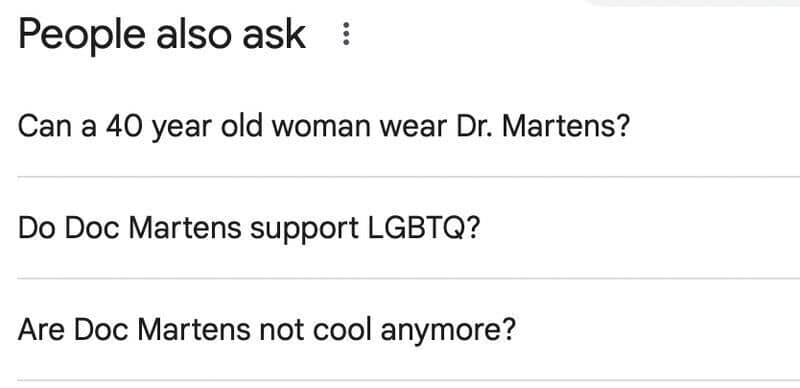
Do SEO? I'll do SEO, I'll just enjoy it better.
These are PAA questions about Doc. Martens and I was asked "how would I structure a content piece with these questions?" ⤵️
I want to highlight that you should think about the questions you can get from AlsoAsked (and PAAs) as *intent* rather than 'keywords you need to write for'.
❌ In this case, I would not be creating an article listing these questions
✅ What I would be doing is talking to the product and social teams, and asking them; "Do we have women models over 40 on our product pages? Are they highlighted on our socials?" These are multi-modal ways to communicate "we are for you, you belong".
✅ Doc Martens is involved in Pride, people want to know this. Is it clearly signposted on their site (they have some news articles). Is it present in their 'About' type pages?
Don't approach intent in a 1-dimensional way 🫶
|
Refer subscribers and earn rewards!
|
|
|