|
SEO updates you need to know
Sponsor: Datos
Discover how people are really searching, discovering, and engaging online
AI continues to reshape how users discover, engage, and click across search environments. But most teams are still making decisions without a clear picture of what's actually shifting.
The Datos State of Search Q1 2026 report, created in collaboration with Rand Fishkin, maps real search behaviour across millions of users in the US, EU, and UK. AI adoption, regional contrasts, e-commerce discovery, and intent signals are all explored in detail using real clickstream data.
|
Search with Candour podcast

AI for Human SEO + Maybe It Isn’t JavaScript
Season 4: Episode 75
Host Jack Chambers-Ward shares a special episode of Search With Candour highlighting two talks from SearchNorwich 18 ahead of the first SearchNorwichXL conference on 24 September 2026.
In the first talk, Crystal Carter (Wix) discusses using AI tools for “actual intelligence” in SEO by emphasizing human experience, real examples, and opinions.
In the second talk, Martin Splitt (Google) presents “Maybe it isn’t JavaScript,” explaining that many indexing issues blamed on JavaScript are actually caused by other issues.
|
|
|
Wait! Allow me to hijack you quickly!
If you like nuanced answers, follow my Substack!
If you're subscribing to Core Updates, you're probably like me, and like your information quickly, and in bite-sized chunks. However, sometimes this can lead to misunderstandings, and some topics deserve more exploration!
That's why I've started a Substack where I take deep-dives into these topics. Last week, I wrote about:
It would be great to have you along for the ride! Anyway, onto this week's tips.
|
This week's solicited tips:
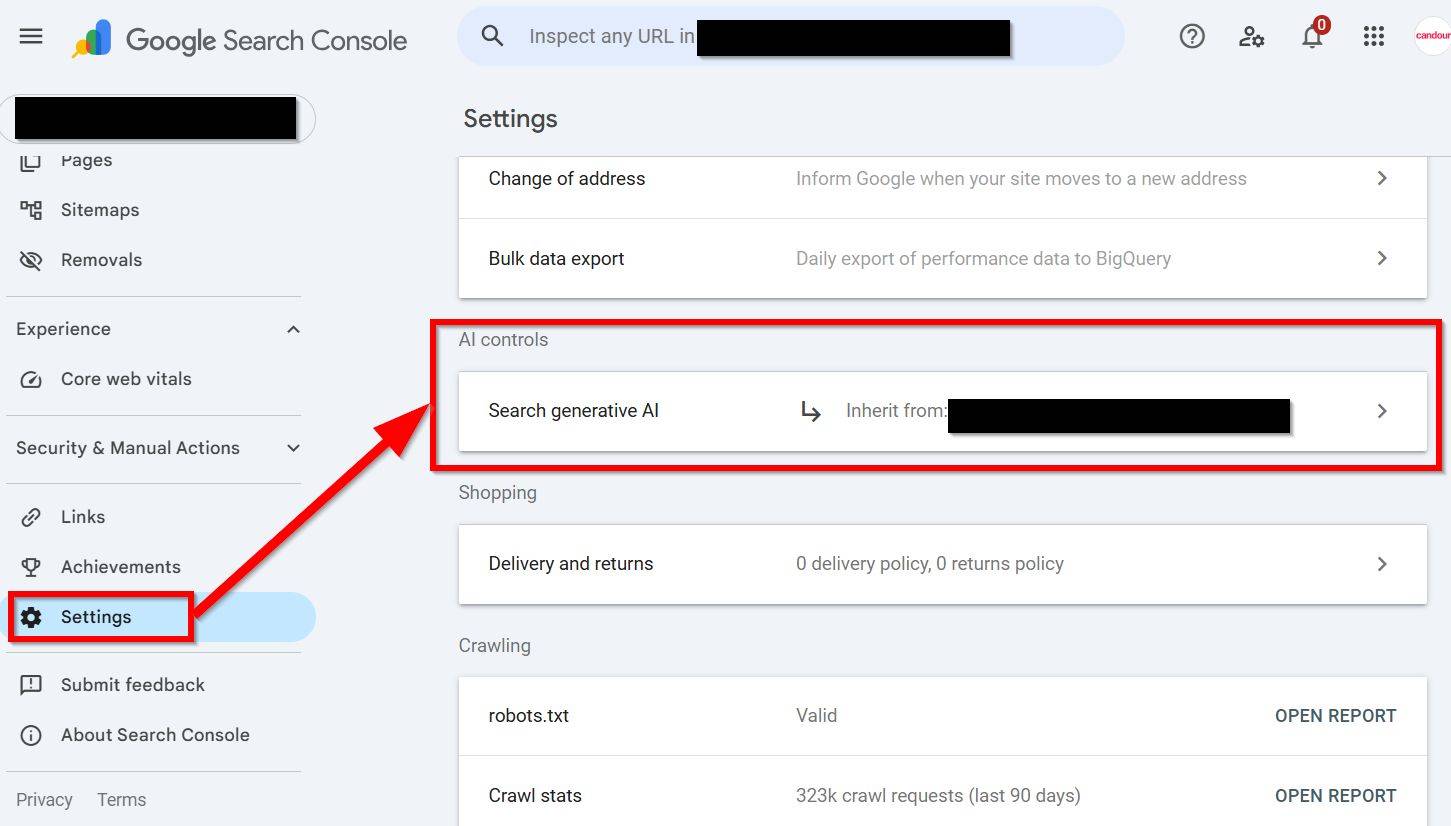
I have the power...to opt-out of generative AI results
For the UK sites that are eligible, you can find the GenAI opt-out setting in Google Search Console in Settings -> AI Controls.
A couple of other notes:
- This setting kicks in on the 17th June
- Subdomains can inherit settings of the main domain, or be specified separately
|
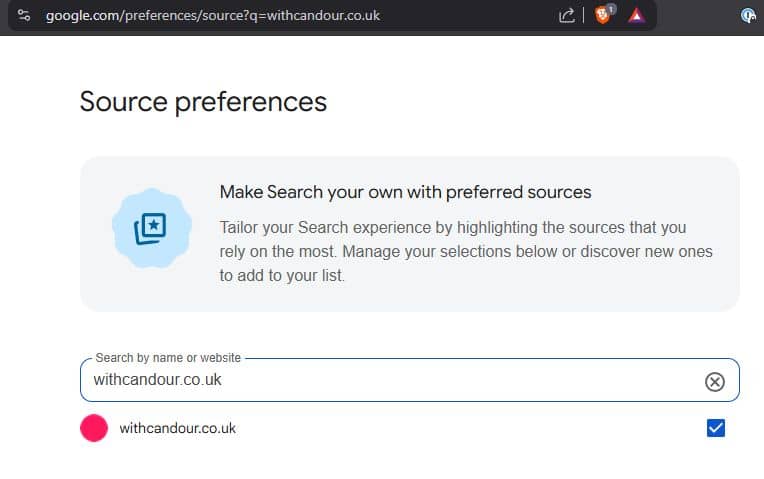
It seems the Preferred Sources have returned
Get google to prioritise content from your website across Top Stories, AI Mode, and AI Overviews by encouraging your visitors to add you as a "Preferred Source". You can set a link with this URL pattern:
➡️ google(.)com/preferences/source?q=[YOUR_WEBSITE]
|
Google is not in an indexing vein this day
Google is a lot more fussy with indexing pages now, so it is helpful to be clear on what is an indexing signal and what is not:
Indexing signals:
✅ Country
✅ Language
✅ HTTPs / Secure site
✅ Core Web Vitals
✅ Links (not nofollow)
✅ Content recency and freshness
✅ Spam policy violations
✅ Hreflang
These things are NOT indexing signals:
❌ Domain age and history
❌ Structured data
❌ XML sitemap
❌ Crawlability
❌ Link velocity
❌ Logical internal linking
❌ Readability
❌ Topical authority
❌ Content depth & comprehensiveness
❌ Matching search intent
❌ Keyword in H1 tag
❌ EEAT (Experience, Expertise, Authority, Trust)
Keep in mind:
🕷️ Crawling does not mean indexing
📃 Indexing does not mean ranking
Good luck 🙃
|
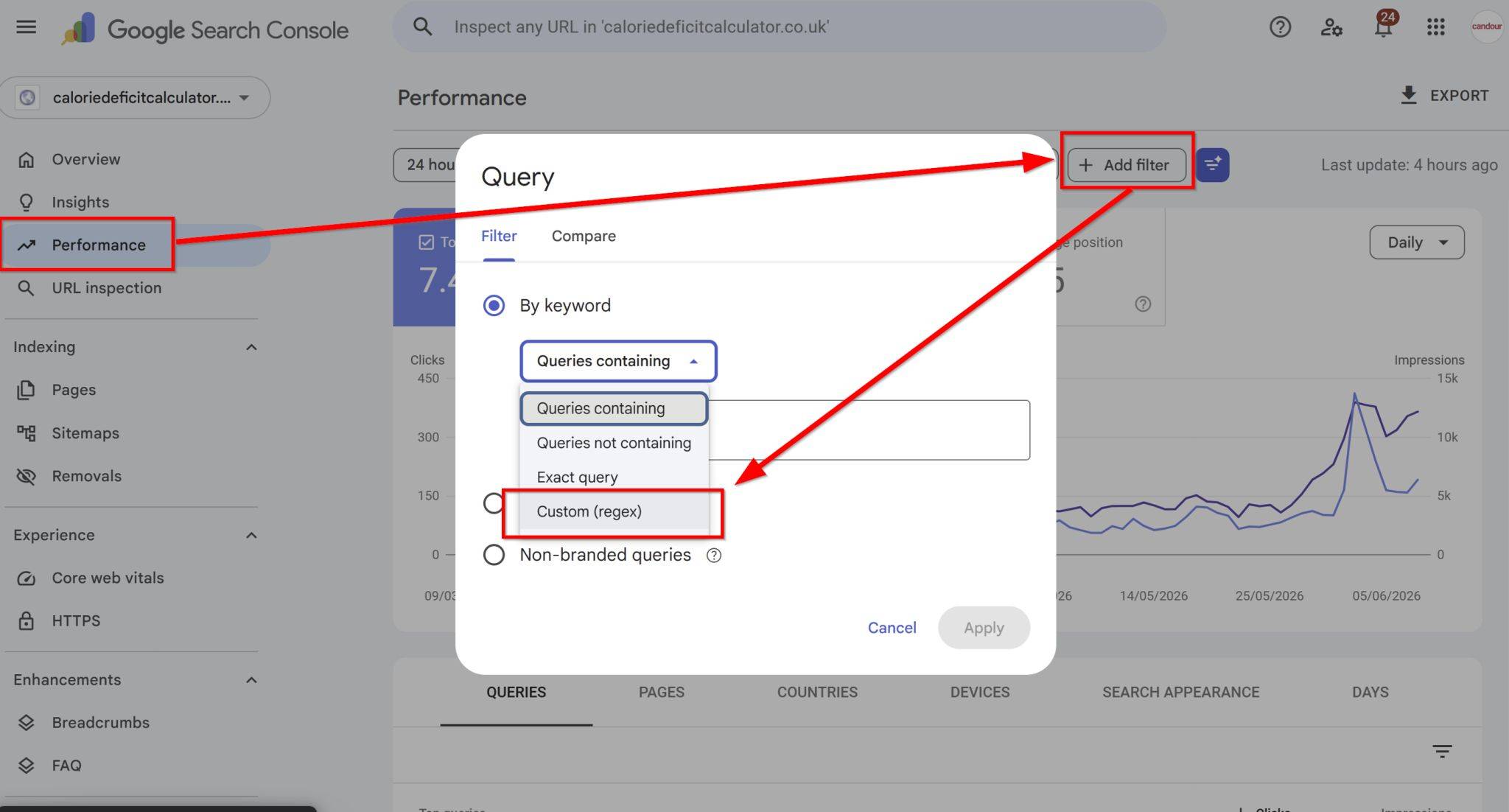
By the power of regex
Instead of spicy 'probably ok' AI, you can reliably* filter your GSC query data to uncover a treasure trove of query types your site is ranking for, with the following regex patterns: 🧙♂️
📃 Informational intent (Guides, tutorials, how-tos)
\b(how to|guide|tutorial|step by step|tips|tricks|ways to|best way to|learn|help|explain|understand|instruction|methods|examples|meaning of|definition)\b
⚖️ For comparisons (e.g., "best", "vs", "alternative", "cheaper"):
\b(best|vs|versus|compare|comparison|alternative|alternatives|better|cheaper|worse|cheapest|highest|lowest|top|difference|differences|differences between)\b
🛍️ Questions on products/services (e.g., "is X good?", "where to buy X?")
\b(price|cost|buy|purchase|available|best|quality|brand|reviews|ratings|features|specifications|order|discount|warranty|deal|shop|store|version|options|model|type|compare)\b
💰 Transactional intent (Buying, pricing, locations)
\b(buy|purchase|price|cost|cheap|discount|deal|coupon|order|shop|store|near me|online|sale|best price|affordable|available|in stock)\b
🧭 Navigational intent (Brand-specific, reviews, support)
\b(review|reviews|rating|ratings|customer service|support|warranty|return policy|refund|complaint|feedback|scam|legit|trustworthy|experience|testimonial|problems|issues)\b
🛠️ Specific for SaaS (Tool queries from Pietro Mingotti)
\b(?:tool|software|app|system|platform|application|program|solution|portal|suite|service)s?\b
❓ Queries with more than 4 words (Likely to be questions)
([^ ]+\s){4,}
To get this:
1) Open your Google Search Console
2) Go to "Performance"
3) On the filters at the top click on "+ Add filter"
4) Select "Query"
5) Change the drop down to "Custom (regex)"
Paste in the regex and be amazed ✨
🏆 BONUS TIPS and Community comments:
- Malte Landwehr warns using the GSC frontend for large sites can be unreliable.
- Stephan Czysch has a GSC Helper Chrome extension with present filters you can use too (link in comments)
- Gianna Brachetti-Truskawa defines small site as ~10k pages, medium as 100k, and large above.
- Ryan Jones points out regex filters is it changes all the metrics to sum up pages - so you get greatly inflated impression counts.
- 🔎 Charles Meaden points out these can be used in other tools such as Ahrefs that support regex
|
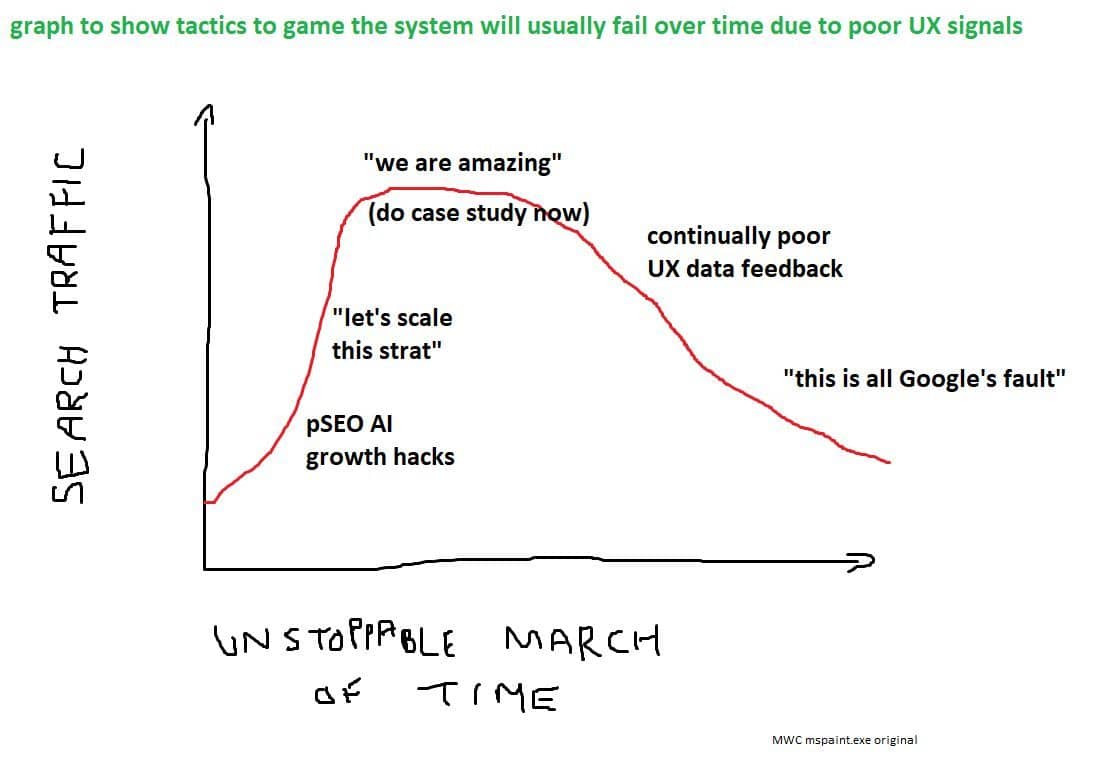
I must automate everything, or I automate nothing
A 'silent' Google update around 20th January claimed a lot of 'programmatic' SEO victims, even some large brands ⚰️ But why?
Like many things in SEO, 'programmatic' is a new name for an old tactic. We used to call it generating 'dynamic' sites. There was a mini economy for individuals scraping the web and building structured databases that SEOs could use to mad-lib together websites to generate all kinds of page variations - and it worked!💰 (Until it didn't).
The GenAI boom made this kind of approach a lot more accessible by lowering the technical bar (what's a Markov chain anyway?). Now you can just feed spreadsheets of data into your favourite LLM and generate content you tell yourself is good. 🙉
We see so many traffic graphs showing 'booming growth' as content, pages, sections, are churned out, producing FOMO in equal measure. Then you get the amazing case study, and nobody talks about the next couple of years when the site's traffic bleeds out.
"But it was worth it, because of all that traffic and revenue!" is something I hear at this stage, but let's consider:
1) The updates we've seen have affected non-programmatic content as well, applying a sitewide suppression; Google telling you it doesn't really trust you as a source anymore. This will take years to recover from.
2) A good way to think about your reputation in Google is a "rolling average", which is why SEO takes time. You've just given yourself low scores, month on month. Even if you bin everything and start over, you've dug yourself an expensive hole to get out of.
3) The reason those signals are bad is because you've given users bad experiences. This is going to rot your brand over time, and SEO aside, that is a hard thing to come back from.
But, of course, it's all Google's fault 🙃
|
Refer subscribers and earn rewards!
|
|
|