|
SEO updates you need to know
Sponsor: Semrush
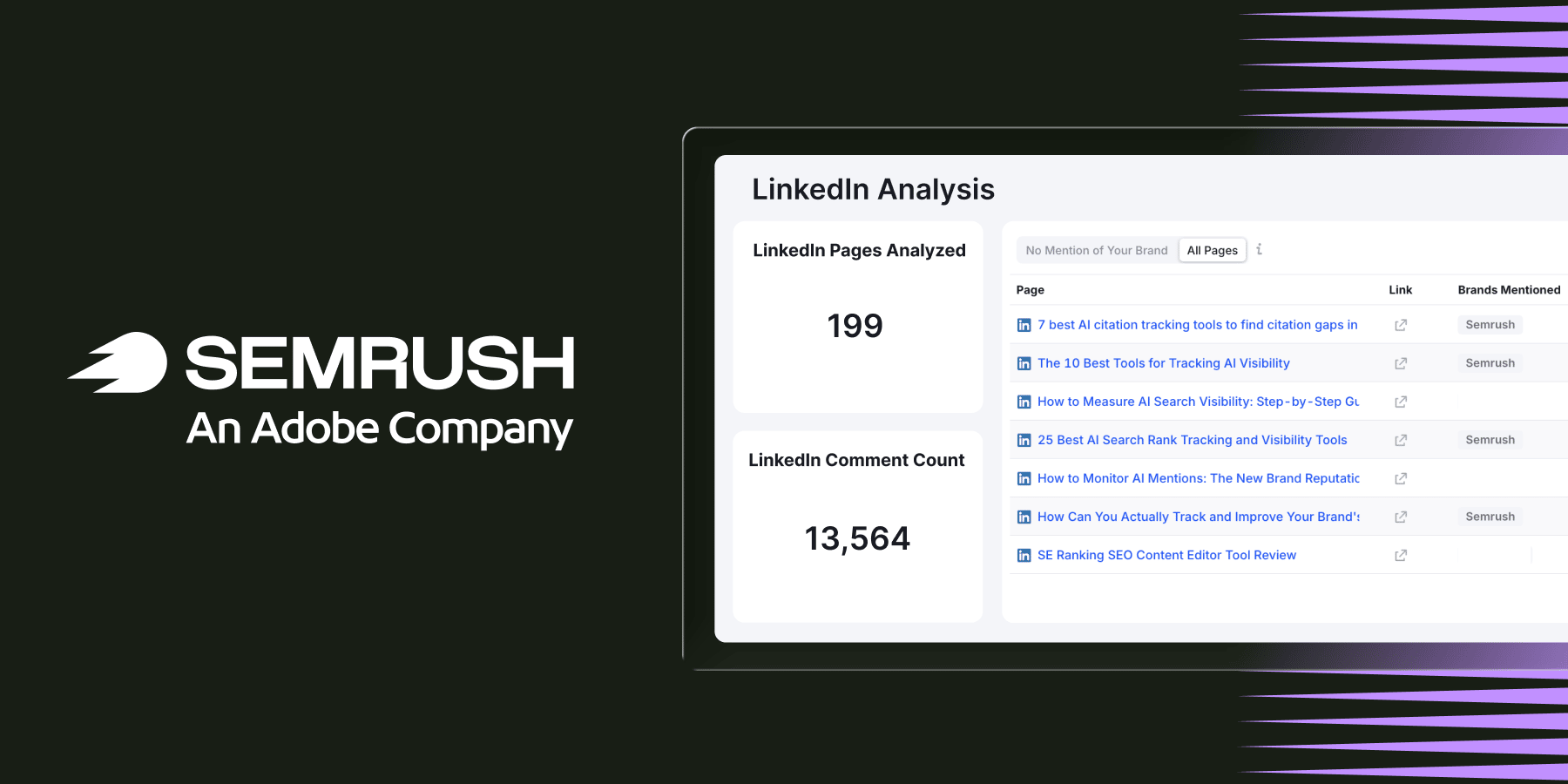
Steer the AI search conversations around your brand
AI models don't just cite brand-owned content. They build narratives from YouTube creators, Reddit threads, and LinkedIn voices. The brands that curate and show up consistently across these touch points shape their industry narratives.
Enterprise AIO gives you the capabilities to track and steer these third-party signals. Identify the creators, channels, and subreddits that matter to your audiences and AI models. Build prioritised actions to grow your authority. Answer the queries your potential customers are actually asking.
|
Search with Candour podcast

SearchNorwichXL preview
Season 4: Episode 85
Jack Chambers-Ward and Mark Williams-Cook present a preview of @SearchNorwich their upcoming conference on 24 September 2026.
Mark and Jack discuss the talks they’re looking forward to and give a preview of what to expect on the day.
|
|
|
SearchNorwichXL price increase

Exclusive £50 discount for 24 hours
SearchNorwichXL ticket prices increase by £50 on 25 August 2026. If you're reading this on the day it's published, that's tomorrow!
If you use code COREUPDATES at checkout, you can save that £50 and get your ticket for just £125 for an extra 24 hours.
|
Last week's SEO tips
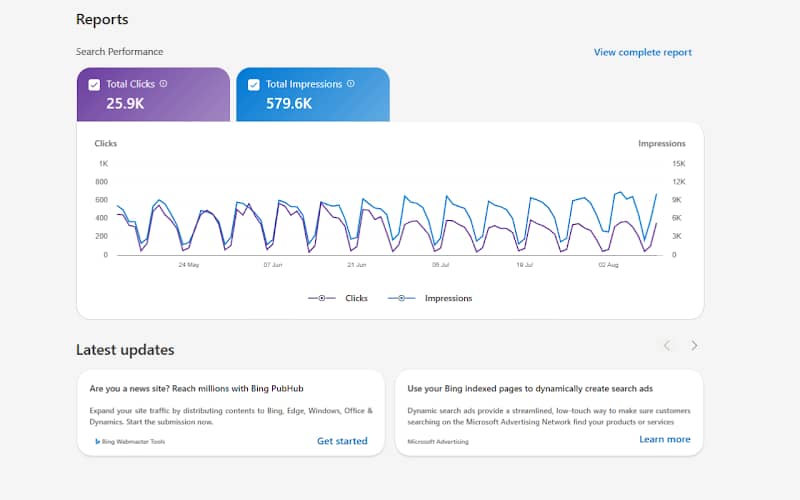
Don't stop Bing now
It's annoying that GSC and Bing Webmaster tools use opposite blue/purple for colouring clicks / impressions, so I made a Chrome extension that flips Bing's colouring to give it parity with GSC. ⬇️
Enjoy the freed up 0.1% brain RAM!🧠 Inspired by Brendan Bennett's grumbles.
|
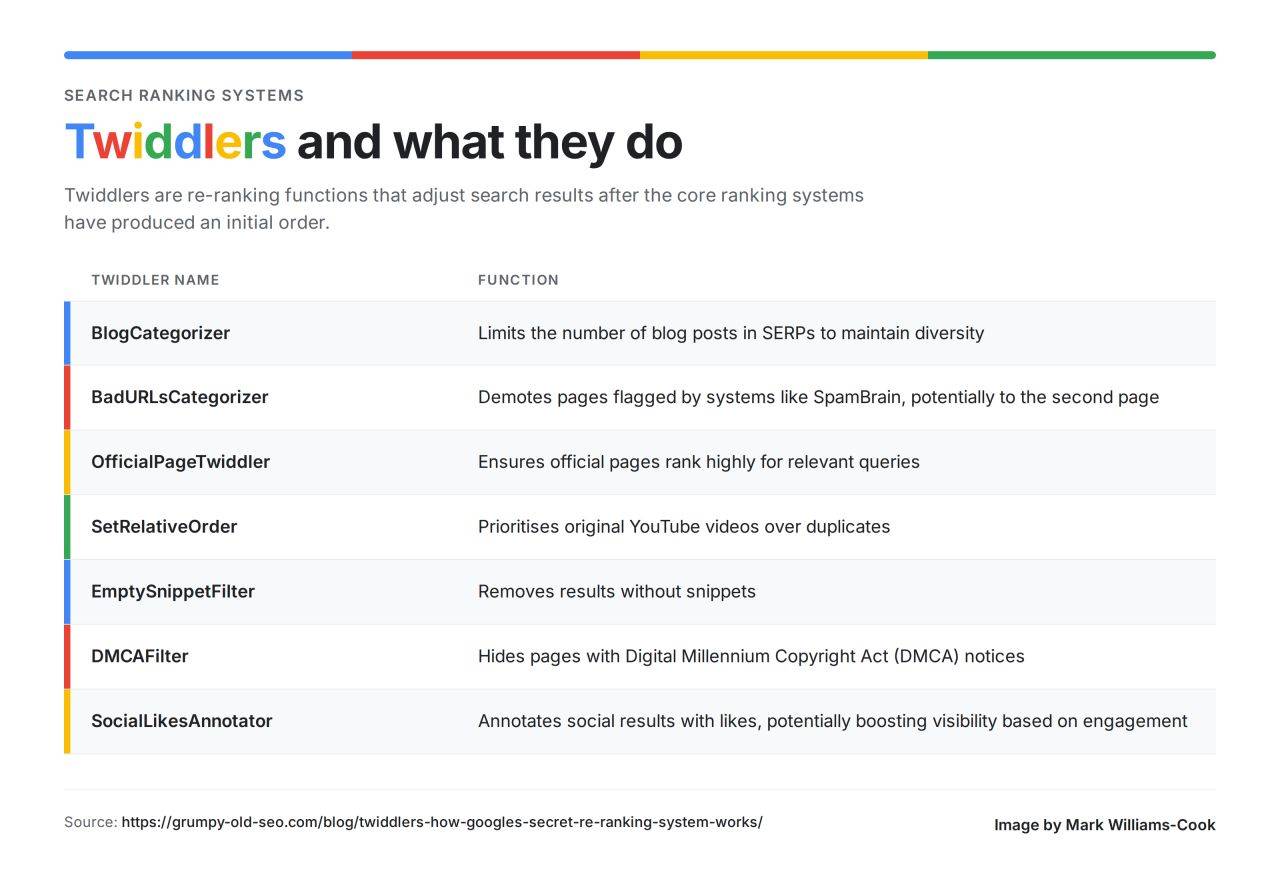
We are the twiddlers
I've seen a lot of confusion over the years, and still to this day about the differences between ranking and re-ranking: I'm looking at you, CTR.
I've posted a few times before about "Twiddlers", especially since we got our hands on the leaked docs in around 2018 🔍
Google’s primary ranking (initial retrieval and scoring) happens first. Then, the Twiddlers step in.
Twiddlers are specialised C++ code objects within Google’s Superroot framework. They act as post-retrieval mechanisms that dynamically re-order search results after they have been fetched.
This re-ranking isn't "site-specific" (so it's not a "ranking factor" for your site). Instead, Twiddlers (categorised mainly as 'Predoc' and 'Lazy' Twiddlers) evaluate the entire set of results to apply boosts or demotions based on:
✅ Search result diversity (e.g., stopping one domain from dominating)
✅ Latent query intent and semantic alignment
✅ Real-time user context (like device or location)
This is the root of arguments like "Google says CTR isn't a ranking factor, but when I manipulate CTR rankings change".
Some more people started writing about Twiddlers of the last couple of years, here is a nice write up I found by Rüdiger Dalchow.
|
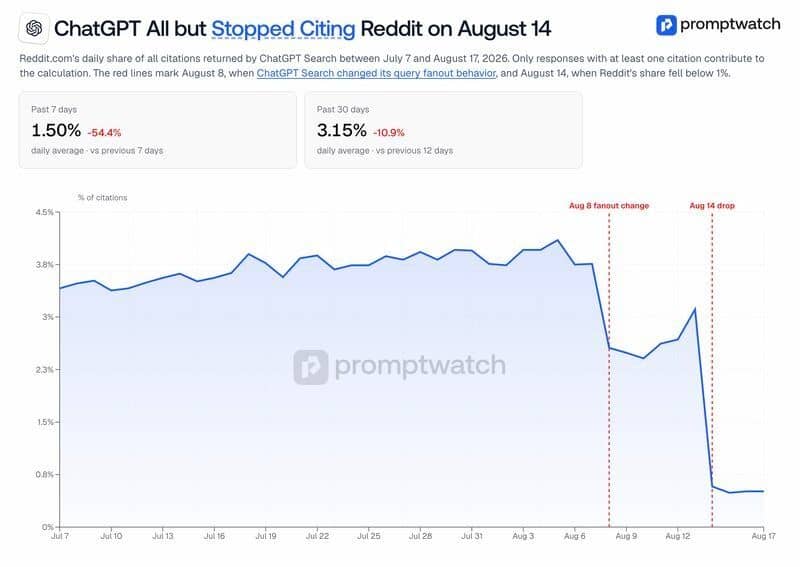
Another Reddit bites the dust
Multiple data sources Peec AI, Promptwatch, Petra Labs and others are showing a massive drop off in Reddit being cited by AI. This highlights two important things ⤵️
1) Stop building your strategies around 'holes' in the system. I've seen way too many companies adopting aggressive "Reddit" strategies, with the goal of manipulating AI answers. The justification of this is, somewhat ironically, that is where "real" conversations take place.
You absolutely should find where your audience is, and you definitely should in engage with them in good faith. What you shouldn't be doing, is hiring a "Reddit agency" to use AI to seed questions and answers for your brand.
2) "It works until it doesn't". All optimisation efforts, should be just that: optimisation. It means you should be focusing on doing the next best thing for your business, in the best possible way for machines; not employing strategies specifically for machines.
It is unknown yet whether this is a more permanent change, or is to do with Reddit negotiating new deals with search engines and AI platforms, but the point remains.
|
Video ga ga
As the technology catches up, I believe we will see a whole other 'edge' of search emerge as processing media at scale becomes a reality. ⤵️
At the moment, search is largely, but not entirely, text-based. Even when people talk about what is happening with things like YouTube, it is primarily automatic transcription of the audio into text that gives search engines the insight they need, not the "actual" video.
We've seen this change over the last few years with images. As a keen user of Google Lens for a long time, being able to search inside an image with full context has been super helpful. (So many people still don't know about Lens, tell your mum/uncle).
This isn't the case for video yet. The fact you're speaking in an upbeat or serious tone is lost. The jokes, the sarcasm, the smiles, the body language, and the thousand other signals humans pick up on are erased as that data is flattened for bot consumption.
This is one reason why LLMs will unhelpfully serve up jokes, satire, or parodies as 'real' information, despite (most) humans being able to successfully distinguish between them.
Of course, that is going to change. Videos are essentially lots of individual images shown very quickly, and I fully expect the complete "experience" of video and other media will get encoded into search.
Having machines 'experience' media in a similar way to humans will provide a significant leap in their ability to serve appropriate content.
If you haven't thought deeply about this, or what you should be *doing* to prepare, I recommend coming to hear Myriam Jessier at SearchNorwichXL on 24th September, as multimodal search is their specialty.
|
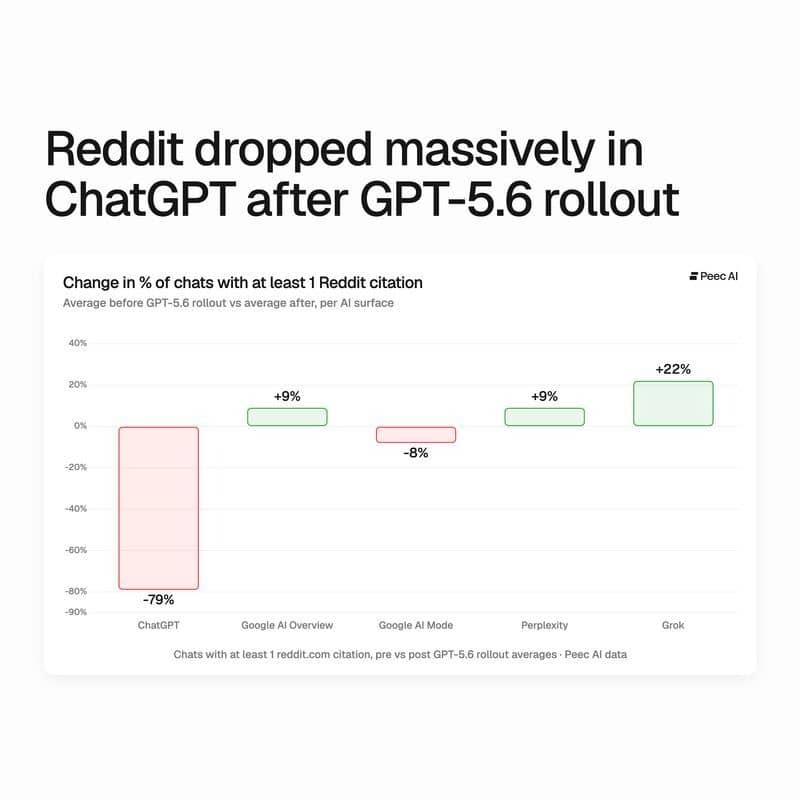
Bohemian Reddit-sody
I've seen some "well known" SEOs (and AI companies) over the last year recommending listicles to clients for AI visibility. I've stuck to my guns with people like Lily Ray that this is generally not a great idea* 👎
The argument is: "Well, it works, because [insert hand-wavey explanation about how AI chooses content that fits the narrative, bonus points to say "chunking"], so that is how we should create the content."
The truth is: The opposite. It works because the technology is still relatively primative for the use case. Do you think AI companies set out with the vision of just surfacing listicles? Of course not. There is literally a financial incentive for them not to do this, for them not to be gamed.
In short: Stop building your strategy on holes in the system.
"It works until it doesn't", and now, like we saw with Google, the sand shifts beneath those who made the "investment" in listicles.
Data from Peec AI
*Yes, with everything, there are some exceptions.
|
Refer subscribers and earn rewards!
|
|
|